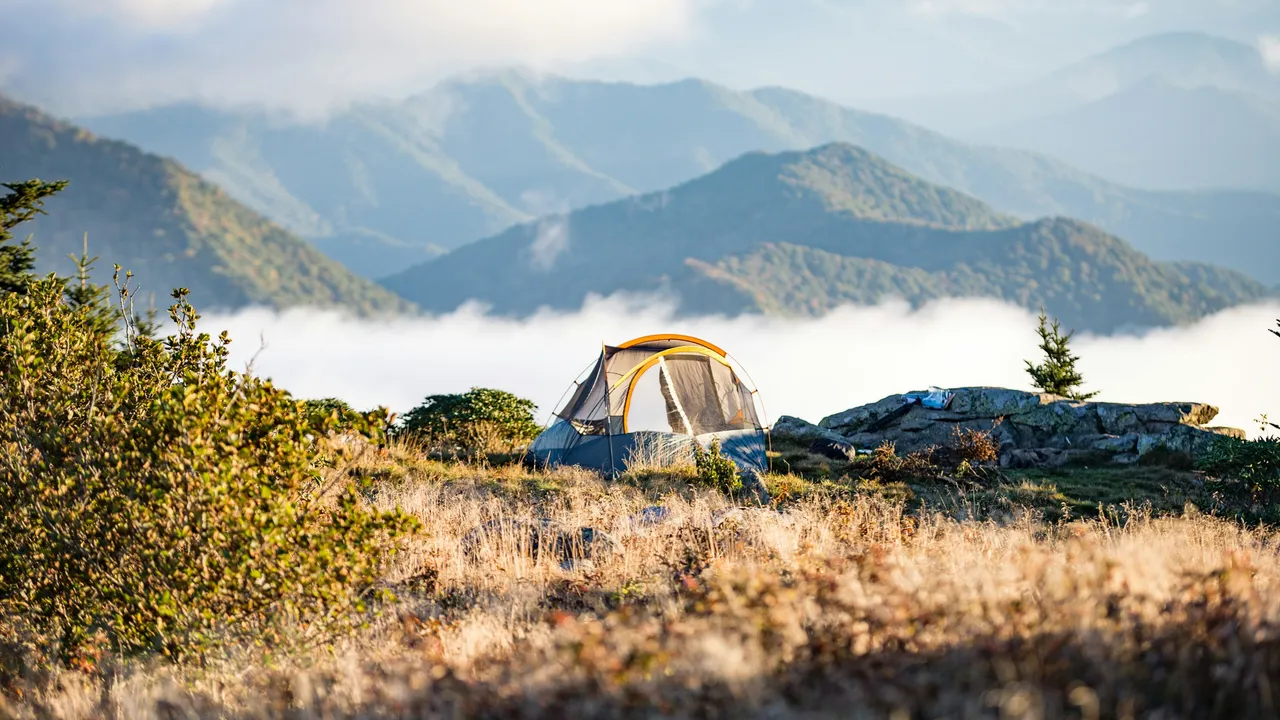
That idyllic moment we see in films—and, increasingly, on Instagram—in which a group of friends roasts sugar clouds on an improvised campfire before drifting off to sleep in the heart of nature is, in our country, almost utopian. Those photos do get taken, yes, but in places like Norway, where they enjoy the ‘freedom to roam’ right—a law that allows you to sleep in a tent, cycle, light a campfire, and, in short, enjoy almost any natural area, regardless of who owns the land.
“Access to nature benefits both physical health and mental health and plays a fundamental role in our daily lives. In a survey we conducted last year, eight in ten participants said that spending time in nature improved their mental health,” Henriette Mordt, Communications Manager for Norsk Friluftsliv, told Condé Nast Traveler, and she added that “64% of Norwegians say they spend time in nature at least once a week.” This last figure shows how present nature is in Norwegians’ daily lives. Norsk Friluftsliv is composed of around twenty Norwegian volunteer organizations, which bring together nearly a million members and 5,000 clubs and outdoor-life organizations.
In Spain the reality is completely different, as, in general terms, wild camping is prohibited. Moreover, practicing it can lead to a fairly high economic penalty.
We’re told this by Pablo García and Carlos Moreno, authors of the cycling travel website Con Alforjas, who point out that the main problem arises if we want to pitch a tent; if we want to sleep under the open sky, things shift… but not by much. “In theory, bivouacking could be practiced, that is, sleeping outdoors without a tent. However, there are some autonomous-regional regulations that also explicitly prohibit it.”